Brainerd Lakes Area · From the Elevate Group Team
The Ultimate Lake Home & Cabin Guide Brainerd Lakes Area
Lake homes are not interchangeable, and neither are lakes. This guide explains how to choose the right water, understand the property you are considering, and avoid the expensive mistakes that trip up buyers every season in the Brainerd Lakes Area. It was written by the Elevate Group team, local lake-home specialists brokered by eXp Realty, drawing on years of on-the-water experience across the region.
Everything in this guide is plain-English and honest. Lake data comes from the Minnesota DNR and local lake association records; water levels, clarity, and populations change, so where numbers could shift we say so and point you to the current source. This guide was last reviewed in August 2026.
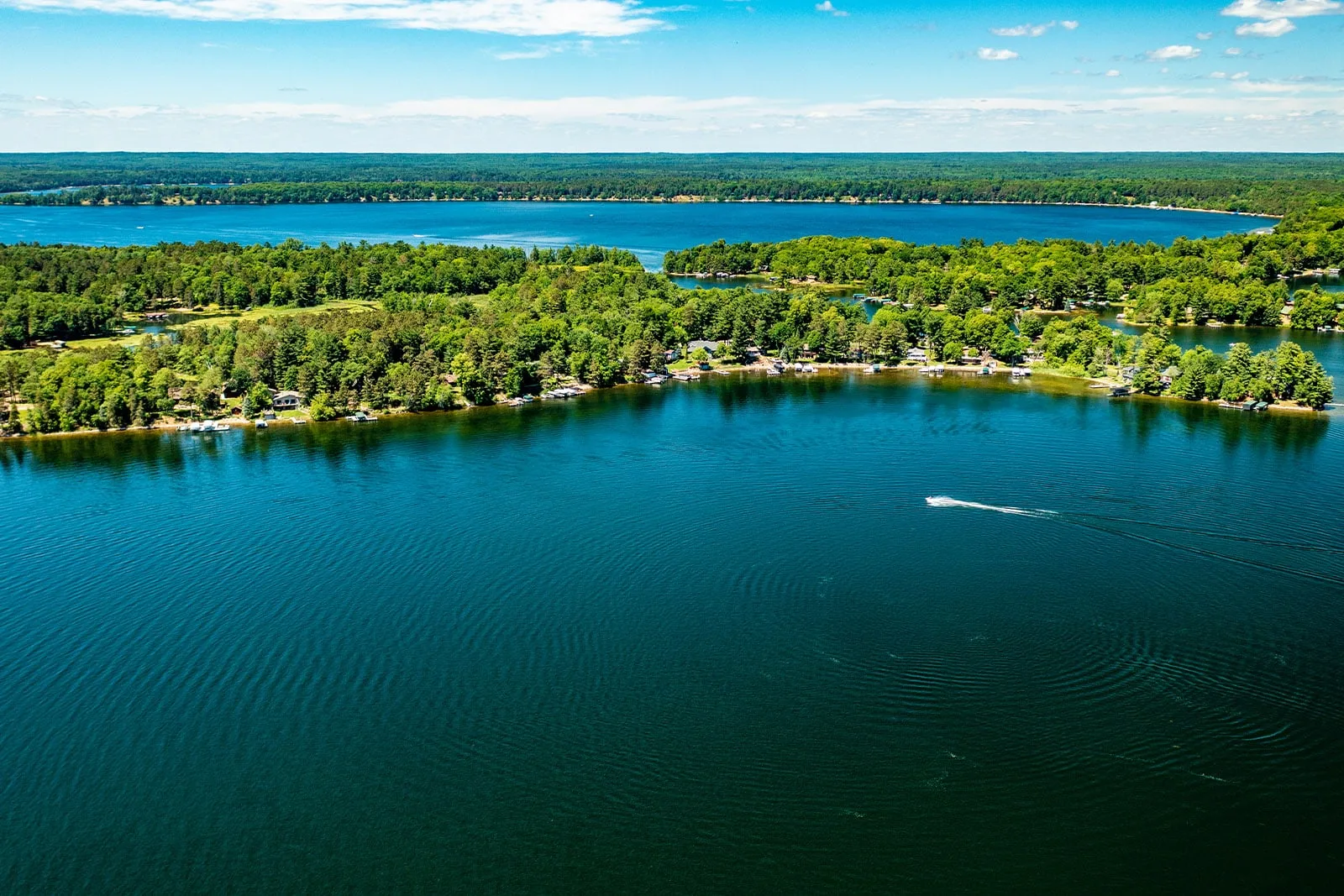
14 lakes
Connected in the Whitefish Chain, with ~115 miles of combined shoreline
~9,900 acres
Gull Lake, the clear-water centerpiece of the Gull Chain
132,516 acres
Mille Lacs, Minnesota’s second-largest inland lake
~18 ft
Average summer water clarity on Serpent Lake (2017, Crow Wing SWCD)
Why a Lake Home
Let's start with the honest reason: people buy lake homes because of how the place makes them feel. The morning coffee on the dock, the kids learning to swim off the raft, the weekend guest who never wants to leave, the summer evenings that somehow go three hours longer than planned. You are buying a life change as much as a piece of real estate, and that is exactly why the purchase deserves more thought than a typical house.
The investment angle is real but secondary. Lakefront in desirable markets has historically held value well, because the supply of water frontage is fixed and the demand for a lake lifestyle keeps growing. But it is not a guaranteed appreciation play, and anyone who tells you otherwise is selling something. The right way to think about a lake home is as a long-term lifestyle asset: if you and your family will actually use it, that value compounds in ways no spreadsheet captures.
Most of the buyers we work with are at a turning point: retirement becoming real, grandkids arriving, a job going remote, or a rented cabin finally making the case that "why are we waiting?" If that sounds like you, the rest of this guide walks through what owning lake property actually involves, lake by lake, term by term, season by season.
A place the whole family returns to, year after year
Recreation as daily life: boating, fishing, swimming, paddling
A fixed-supply asset in a market with steady demand
A property that can host generations rather than just one household
A different pace: quieter mornings, longer evenings
Four distinct seasons, each with its own reason to be there
Lake Home vs Cabin vs Land
The first decision is not which lake. It is what kind of property you are actually buying, because the three options behave very differently in financing, insurance, taxes, winter, and resale.
Year-Round Lake Home
A four-season home on maintained, plowed access. Full-time or frequent use, standard financing options, broadest insurance market, and the widest buyer pool at resale. Premium lakes and shoreline are at a premium price, and year-round construction and access are the price of full-time living.
Seasonal Cabin
Used for the open-water season and weekends, often on seasonal roads with simpler systems. Generally a lower entry price than a year-round equivalent on the same lake, with trade-offs: seasonal construction, limits on winter use, tighter insurance and financing options, and a smaller eventual buyer pool unless it can be converted.
Lake Land & Lots
Buy the lake and the lot first, build later. The patient path: frontage, shoreline, and water quality are locked in at the land price. Buildability is the whole game, and septic siting usually decides it. New construction also has real lead times, so plan for the timeline, not just the cost.
A few practical notes that apply to all three. Winter access: confirm whether the property sits on a township-maintained, year-round road or a seasonal access, because that one fact decides whether you can reach the place in January. Insurance: waterfront coverage is its own specialty, with liability around docks and boats and, in flood zones, flood insurance requirements. Taxes: waterfront is assessed for its lake value, so frontage and shoreline show up on the tax bill, and owner-occupied year-round homes may qualify for homestead treatment.
And a conversion note: many seasonal cabins become year-round homes when the lot, septic, well, road access, and county requirements allow it. It is a common, positive path, but it is governed by the same shoreland and septic rules that protect the lake, so the upgrade conversation starts with the county, not the contractor.
What's Your Waterfront? Terms Decoded
Lake listings use a language of their own. Click any term to get the plain-English definition and why it matters to your decision. These are the words that separate a good lake purchase from an expensive education.
Frontage (Shoreline Feet)
The length of your property line measured along the water’s edge, in linear feet. It is the most commented-on number in lake real estate.
Why it matters: More frontage usually means more value and more usable waterfront. On most area lakes it is measured roughly from ordinary high water, and it can vary meaningfully between adjacent lots, so never assume it from the listing photo.
Deeded Access
An off-lake lot that comes with a legal right to reach the water at a specific shared or dedicated access point, rather than owning shoreline directly.
Why it matters: Deeded access is a solid, budget-friendly way into lake life, but it is not lakefront. Confirm the access point, whether it is shared, and whether there is room to park, launch, or dock before you bid.
Riparian Rights
The rights that belong to the owner of land touching the water: reasonable use of the water adjacent to your shore, including boating, swimming, and docking, subject to public law and local rules.
Why it matters: In Minnesota, the water of a navigable lake is public, but your riparian rights attach to shoreline ownership. It is why the lot, not just the view, is what you are really buying.
Water Clarity
A measure of how far light penetrates the lake, usually reported as a Secchi disk reading in feet. It is a window into the lake’s overall water quality and health.
Why it matters: Clarity affects swimming, weed growth, algae, and the general feel of the lake. Readings change season to season, so ask for the lake’s monitoring history across a few years, not one day’s number.
Lake Bottom Content
What the lakebed is made of where you swim and anchor: sand, gravel, rock, muck, or a mix. It is largely set by geology and very hard to change.
Why it matters: Sand and gravel bottoms make for easy swimming and wading. Muck bottoms are unpleasant underfoot and often signal shallow, vegetated areas. Check the bottom at the dock and the swimming area before you commit.
Depth vs Drop-Off
Average and maximum depth tell you the character of the lake. Drop-off describes how quickly the bottom falls away from shore.
Why it matters: A steep drop-off can mean great fishing and a deep-water dock, but a poor swimming beach for kids. Shallow, gradual slopes warm faster and grow more weeds. Match the profile to how you will actually use the water.
Elevation
The height of the lot and house relative to the water. A level lot sits near the waterline; an elevated lot may be 30 to 80 or more stairs above the dock.
Why it matters: Elevation drives every trip between house and water, and stair access is one of the most common reasons a beautiful property feels wrong after a few seasons. It also shapes resale demand, especially among older buyers.
Ordinary High Water Level (OHWL)
The line where the water consistently stands during the normal high-water season. It is the legal reference point for shoreland rules on your lot.
Why it matters: Setbacks, septic siting, and structure placement are measured from the OHWL, not from where the waterline sits on the day you visit. Know where this line runs before you plan anything.
Shore Impact Zone
The band of land closest to the water where the strictest rules apply, typically about half the required structure setback.
Why it matters: Permits are often required for grading, filling, or vegetation work inside the shore impact zone. Protect it and you protect the lake and your resale value.
Lakeshore Classification
Counties classify each lake as General Development, Recreational Development, or Natural Environment under Minnesota shoreland rules, and that classification sets the rules on your lot.
Why it matters: Classification determines structure setbacks and permitted uses. Ask your agent or the county what classification applies to the lake you are considering before you fall in love with a lot.
Terms like setback, compliance, and ordinary high water are defined by the county that regulates the property. Definitions above are plain-English summaries to help you ask better questions, not legal advice. Your county planning office and township clerk are the authorities on your specific lot.
Ballpark Cost Snapshot
Every lake conversation starts with the same question: what does this cost? The honest answer is that it depends on the lake, the frontage, the shoreline, and the condition, not on a single number. Use this snapshot to understand what drives price for each property type, then get current listings and sold data for the specific water you care about.
Year-Round Lake Home
A four-season waterfront home on a maintained, plowed access. This is the premium of lake real estate: the broadest buyer pool, the most predictable financing and insurance, and a home you actually live in every month of the year.
Lake desirability and water quality drive value more than anything else
Frontage, shoreline quality, and elevation set the lot premium
Four-season construction, insulation, and heating matter to appraisers and lenders
Winter access and township-maintained roads expand the buyer pool
Elevate Group works primarily with waterfront and higher-end properties, typically in the $800,000 to $5 million range. Where your target sits inside that range depends almost entirely on the lake, the frontage, and the shoreline, not the square footage.
Guidance only. We do not publish a price menu because it would be wrong a month later. Market values move, and lake pricing is property-specific. Current listings live at brainerdlakeshomesearch.com, and we will pull current comparable sales for the specific lakes and counties you are considering.
Lake-by-Lake Explorer
Not all lakes are equal, and the differences are not about size alone: they are about water clarity, depth, boat traffic, community, and long-term value. Here is the honest character sketch of the lakes and chains we work with most. Figures come from the Minnesota DNR and lake association records and can shift over time, so treat them as a starting point, not scripture. For a broader read, see our post on the best lakes to live on in the Brainerd Lakes Area.
Whitefish Chain
Crosslake, Pequot Lakes & Breezy Point
Connected lakes
14
Total water area
~14,000+ acres
Combined shoreline
~115 miles
Deepest point
~138 ft (Lower Whitefish)
Cross Lake
~1,800 acres, ~85 ft deep
Big Trout Lake
~1,360 acres, ~128 ft deep, trout-stocked
The Whitefish Chain is the boater’s lake system of the Brainerd Lakes Area: fourteen connected lakes near Crosslake, Pequot Lakes, Jenkins, and Breezy Point, formed when the Pine River dam went in at Crosslake in the 1880s. You can launch once and spend a week exploring: open main basins, narrow channels, islands, and quiet bays, with roughly 115 miles of combined shoreline and about 14,000 acres of water.
Lower Whitefish holds the chain’s deepest water at around 138 feet. Cross Lake sits at roughly 1,800 acres, and Big Trout Lake is a deep, DNR-managed, trout-stocked lake at about 128 feet. Water quality and clarity are generally good and change lake to lake and year to year, so ask for current Secchi readings and the chain’s lake association monitoring data when you compare properties.
Who It Suits
The Whitefish Chain suits serious boaters, families who want a lake-first year-round community, and anyone who wants variety: big water one day, a quiet bay the next. It is the most boating-centric lifestyle in the area, and Crosslake’s winter culture keeps the community active when the docks come out.
Nearby Communities
Which Lake Fits You?
Answer six honest questions and we will point you to the lake or chain that best matches how you actually plan to use the water. It is a starting point, not a verdict. The right answer usually comes from a weekend on the lake and a conversation about your real criteria.
Your Best Lake Match
Whitefish Chain
The Whitefish Chain keeps answering for you: fourteen connected lakes, miles of shoreline, and a boating lifestyle that never runs out of water. Crosslake, Breezy Point, and Pequot Lakes give it a real year-round community, not just a summer crowd. It suits boaters, lake-first families, and anyone who wants a life organized around open water and ice-out.
Want to compare Whitefish Chain with a neighboring lake? We do that on every search. A 30-minute conversation saves weeks of guesswork.
Your Best Lake Match
Gull Lake Chain
Gull Lake and its chain keep showing up: clear water, resort amenities, dockside dining, and one of the strongest resale histories in the area. Nisswa’s downtown and the lake’s social summer scene fit the way you actually want to live. If you like people, events, and a lake that feels alive, start here.
Want to compare Gull Lake Chain with a neighboring lake? We do that on every search. A 30-minute conversation saves weeks of guesswork.
Your Best Lake Match
Pelican Lake
Pelican Lake is your match: big, deep, and exceptionally clear, with steep drop-offs that make every day feel different. It is the largest lake in Crow Wing County, close to Breezy Point and Pequot Lakes, and calmer along the shoreline than its size suggests. Families who want a large-lake experience without the biggest crowds tend to love it.
Want to compare Pelican Lake with a neighboring lake? We do that on every search. A 30-minute conversation saves weeks of guesswork.
Your Best Lake Match
Nisswa-Area Lakes
The Nisswa-area lakes fit you: Clark, Roy, and Nisswa Lake are smaller, clearer, and minutes from one of the most charming towns in Minnesota. You get town character, easy access, and a more manageable lake for a smaller boat, a paddle, or a first purchase. It is an easy place to start and an easy place to stay.
Want to compare Nisswa-Area Lakes with a neighboring lake? We do that on every search. A 30-minute conversation saves weeks of guesswork.
Your Best Lake Match
North Long Lake
North Long Lake is your match: a big lake with a full-time community, minutes from Brainerd and Baxter for every service you can name. It balances sizable water with city convenience, which is exactly the trade you told us you want. Full-timers and weekenders both find their rhythm here.
Want to compare North Long Lake with a neighboring lake? We do that on every search. A 30-minute conversation saves weeks of guesswork.
Your Best Lake Match
Mille Lacs
Mille Lacs keeps answering for you: one of the great fishing lakes in North America, vast and open, with a serious angling culture and lake towns that built their identity on the water. It is a different rhythm from the cabin chains, and it suits people who want big water, big fish, and room to roam. Just be ready for weather that changes fast on open water.
Want to compare Mille Lacs with a neighboring lake? We do that on every search. A 30-minute conversation saves weeks of guesswork.
Your Best Lake Match
Sylvan Lake
Sylvan Lake fits you: a quieter Cass County lake near Pillager with two basins, good fishing, and a low-key resort-area feel. It suits paddlers, pontoon people, and buyers who want privacy and calm over crowds. If the goal is to actually relax, this is the water for it.
Want to compare Sylvan Lake with a neighboring lake? We do that on every search. A 30-minute conversation saves weeks of guesswork.
Your Best Lake Match
Serpent Lake
Serpent Lake is your match: clear water right in the middle of Crosby’s Cuyuna adventure scene, with miles of mountain bike trails, a walkable downtown, and year-round energy. It is the lake you choose when you want outdoor adventure and a creative small town, not just a shoreline. Active, clear, and genuinely fun.
Want to compare Serpent Lake with a neighboring lake? We do that on every search. A 30-minute conversation saves weeks of guesswork.
Answer all six questions, then hit "See My Lake Match" again.
What to Inspect Before You Buy
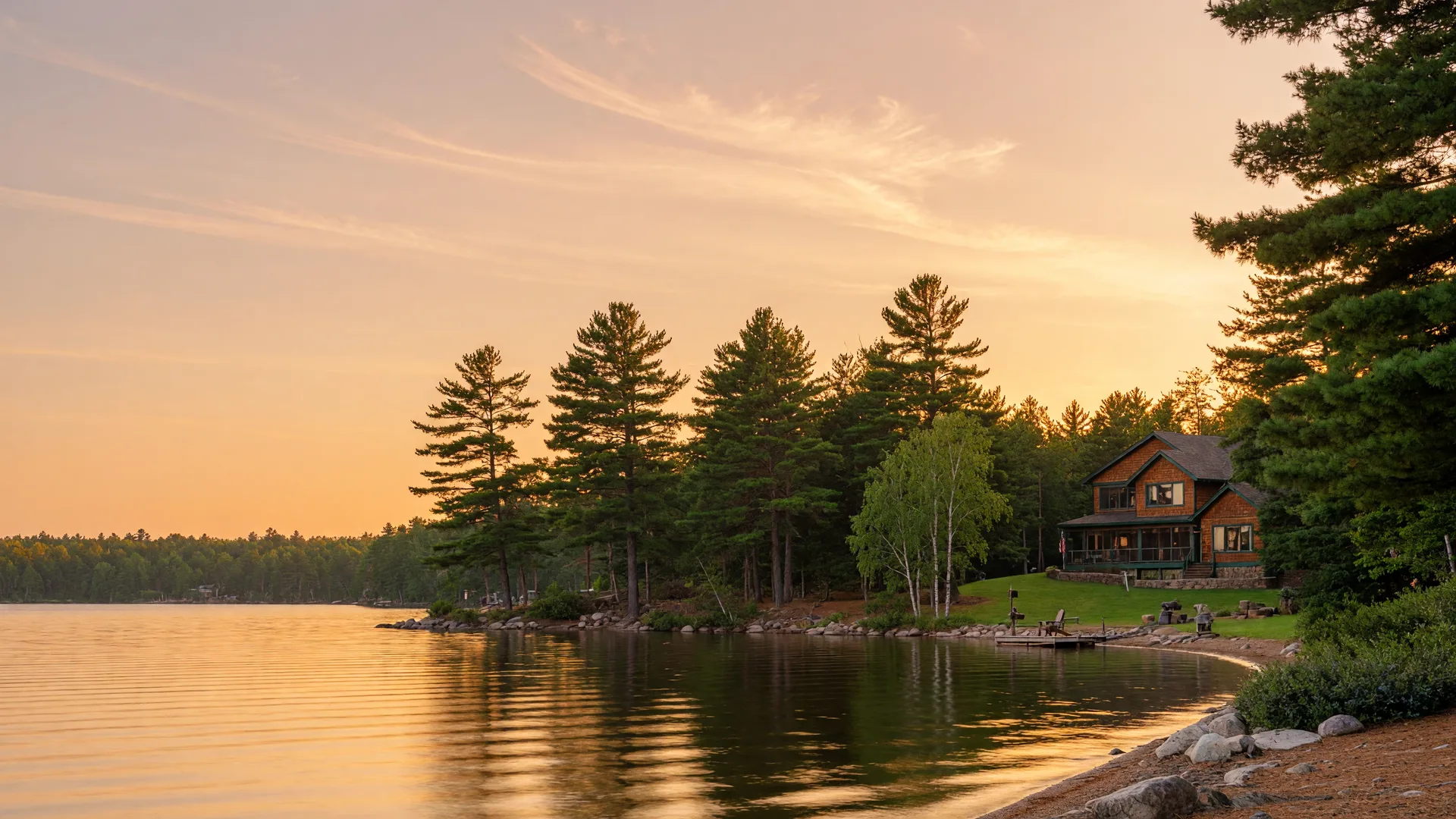
A lake home is inspected twice: once for the house and its systems, and once for the lake, lot, and shoreline. The second inspection is where lake buyers either protect themselves or learn an expensive lesson. Here is the honest due-diligence list we walk through on every property. Click any item for details.
01 Septic System (SSTS)
Minnesota requires a compliant sewage treatment system at the time of property transfer, and the county inspects and issues the compliance certificate as part of the process. Ask for the system’s age, permits, pump-out history, drain field location, and a copy of the certificate before you offer. Replacement can cost tens of thousands of dollars depending on the site, so this is the single most important due-diligence item on a lake property.
02 Private Well
Most lake homes run on a private well. Confirm the well’s location, depth, age, and construction records, and have the water tested for the contaminants common in central Minnesota, including coliform bacteria, nitrate, arsenic, and manganese. Water quality results are easy to get and hard to argue with after closing.
03 Shoreline & Erosion
Walk the entire shoreline, not just the beach by the dock. Look for wave-cut banks, exposed roots, slumping, and steep unstable slopes, and ask whether any shoreline work has permits on file. Erosion fixes can be minor or major, and unpermitted past work can become your problem at resale.
04 Docks, Lifts & Watercraft
Establish exactly what stays: dock sections, the boat lift, the swim raft, boats, and personal watercraft are usually negotiable. Inspect the dock and lift for rot, rust, and worn cables, and confirm they are permitted to remain under county, township, and any lake rules. Get the agreed list in writing in the offer.
05 Roof & Winter Stress
Minnesota winters attack roofs, gutters, and anything with seams. Ask the roof’s age, look for ice-dam history inside and out, and check gutters, vents, and flashing. Frost heave shows up in decks, stairs, walkways, and posts, so walk the exterior carefully in spring and fall.
06 Insulation, Heating & Plumbing
Is the cabin winterized, heated through winter, or shut down? Check insulation levels, window condition, the heating system’s age and fuel (propane, electric, wood, or a mix), and any history of frozen pipes. Seasonal cabins are often insulated for summer use only, and the upgrade to four-season can be significant.
07 Electrical & Mechanical
Older cabins often carry older wiring, panels, pumps, and water heaters. Have an inspector evaluate the panel, wiring, well pump, and major appliances, and budget for what is near the end of its life. A dry-rotted pump or panel is not a reason to walk away, but it is a reason to negotiate.
08 Structure & Foundation
Posts, piers, crawlspaces, and deck attachments take a beating near water. Look for moisture, rot, and poor connections, and note whether the home was built as seasonal or year-round construction. The house can be changed. The lake usually cannot, so evaluate the lake and lot first and the structure second.
Inspections cover the house. We bring the lake, lot, shoreline, and long-term value into the same conversation.
Rules & Shoreland
Minnesota protects its lakes with shoreland rules, and those rules shape what you can build, where you can build it, and how you can use your shoreline. The good news is that the system is understandable once you know the questions to ask. The important caveat is that the answers come from your county, not from a real estate website.
Under Minnesota's shoreland management rules, lakes of 25 acres or more in unincorporated areas (10 or more inside cities) trigger shoreland jurisdiction. Structure setbacks are measured from the ordinary high water level, with model minimums of 75 feet on General Development lakes, 100 feet on Recreational Development lakes, and 150 feet on Natural Environment lakes, plus a 30-foot bluff setback. The shore impact zone, the band closest to the water where the strictest rules apply, is typically about half the required setback.
Counties adopt their own versions of these rules, and townships can layer on their own ordinances, so the operative numbers on your lot come from local government. Crow Wing, Cass, and Aitkin counties each administer their own zoning and shoreland programs, and each enforces its own septic, building, and land-use rules. Always verify with the specific county and township for the address you are considering. The DNR's shoreland page for property owners is a good starting point.
Septic Compliance
New and replacement systems need a county permit, and Minnesota requires a compliant system at property transfer: the county inspects and issues a compliance certificate as part of closing. A failing or noncompliant system can cost tens of thousands of dollars, and space for a replacement drain field is not guaranteed on every lot.
Shoreline Work Permits
Grading, filling, vegetation clearing, sand blankets, and riprap inside the shore impact zone typically need permits. Work in or near the water, including excavation and dredging, often needs a DNR public waters permit as well. Get the permit history of any shoreline you are buying.
Docks & Boat Lifts
Seasonal docks and lifts are a normal part of lake life and generally do not require a permit when they are installed and removed each year, but placement, length, and structure rules vary by county, township, and lake. Permanent or expanded structures need review, so verify before you install or replace.
Structures & Setbacks
Expansions, additions, garages, and accessory buildings all need permits and must respect setbacks, height, and shore impact zone rules. One water-oriented accessory structure per lot may be allowed within the setback under the model rules, with size limits, but the local ordinance controls.
The fastest way to the truth: call the county environmental services or planning office for the county where the property sits, and the township clerk. Crow Wing: crowwing.gov. Cass: casscountymn.gov. Aitkin: aitkincountymn.gov. Rules change and specific lots differ; nothing on this page replaces the county's answer.
Short-Term Rental Considerations
A lake home that rents itself when you are not using it is an appealing idea, and it is one of the first questions buyers ask. The honest answer: it is possible on some properties and impossible on others, and the deciding factor is where the property sits, not what it looks like.
Short-term rental rules vary by county and township across the Lakes Area, and they have been changing quickly. Crow Wing County operates a licensing ordinance for rentals under 30 days in the areas it regulates, with an annual license and a fee based on the number of advertised bedrooms. Cass County approved its own licensing ordinance in early 2025 for shoreland and residential zoning districts. Aitkin County regulates vacation rentals through an interim use permit process with recurring inspections. Cities and townships may run their own ordinances or contract with the county, so the answer for one property can be different from the answer a mile away.
Two more things to factor in. First, occupancy and lodging taxes may apply to short-term rentals, and rates and rules differ by location. Second, a rental program stresses a septic system and a shoreline in ways a family home does not, so old systems and steep banks deserve extra scrutiny if you plan to rent. We are not in the business of promising occupancy numbers or profitability, because nobody honestly can for your specific property.
Before You Offer, If Rental Income Matters
-
Ask the county planning office and the township about STR rules for the exact address, in writing
-
Check whether a license or permit exists, what it costs, and when it renews
-
Confirm septic capacity and shoreline condition can handle rental turnover
-
Ask about occupancy and lodging taxes that apply to short-term rentals
-
Factor rental limits into your offer: some townships cap nights per year or restrict them entirely
Rules change and are enforced at the local level. Nothing on this page is a guarantee that a given property can be rented. Verify with the authorities, then make the decision with facts.
Owning & Maintaining
Lake property is a partnership with the seasons. The good news is that the work is learnable, predictable, and mostly enjoyable: there is something satisfying about closing the place for winter properly or watching the dock go in on the first warm day. The bad news is that skipping it is expensive. Winterization failures and unattended docks cost more than any maintenance contract.
The interactive checklist below covers a typical year for a Minnesota lake property. Check items off as you go, and use the print button for a clean copy for the fridge or the shop. It is general guidance for the area, and your specific property, lake, and township may call for more.
Seasonal Lake Home Maintenance Checklist
Spring start-up, summer, fall close-up, winter watch, and year-round care for a Minnesota lake property.
Spring Start-Up
Summer Season
Fall Close-Up
Winter Watch
Year-Round Care
Lake Home Maintenance Checklist · Elevate Group, brokered by eXp Realty. Timelines like septic pumping intervals vary with use and system design; verify specifics with your septic professional and county.
Winterization Essentials
Drain and blow out water lines, pumps, water heaters, and toilets. Shut off exterior faucets. Keep heat at a safe minimum if the home stays heated, and ventilate crawlspaces. The cost of one frozen and split pipe is far above the cost of a professional winterization service.
Well & Septic Care
Pump the septic on a 3 to 5 year cycle depending on use, keep wipes and grease out of the system, and never park heavy equipment on the drain field. Test the well annually, especially after spring thaw, and know where the well head sits relative to the septic system.
Dock & Lift Ownership
Docks and lifts are the most used and most weather-beaten items you own. Inspect cables, winches, and bolts every year, treat wood and metal at install and removal, and confirm your setup complies with county, township, and lake rules before replacing or expanding it.
Financing & Insurance for Lake Homes
Financing and insuring a lake home is different enough from a city house that it deserves its own conversation, and it is a conversation worth starting before you shop. We are not lenders or insurance agents, so here is what we can tell you honestly, and where to go for the specifics.
Financing a Lake Home
Vacation and second-home lending typically involves larger down payments and different underwriting than a primary mortgage, and some loan programs restrict seasonal construction or require year-round access. Appraisals on unique waterfront are more involved because the appraiser values the lake, lot, shoreline, and setting, not just the finished square footage. Work with a lender who knows waterfront and second homes in this market, get pre-approval early, and ask how the specific property type (year-round, seasonal, or land) affects your program. Loan rates change constantly, so we do not quote them here.
Insuring a Lake Home
Waterfront coverage is a specialty. Expect conversations about liability around docks, lifts, and boats, older cabin construction, seasonal occupancy, and flood exposure for properties in or near flood zones. Some older lake properties take more work to insure, and flood coverage is often a separate policy. Get quotes from an agency that knows lake property before you make an offer, not after, and review the coverage every year as the property, and your use of it, changes.
We are happy to connect you with the local lenders and agencies we work with on lake property, on both sides of every transaction. General guidance only: terms, rates, and underwriting change, and your situation is yours. Consult a local lender and an insurance agent for your numbers.
Lake Life Year-Round
The honest version of lake life includes all four seasons, and the buyers who love it here tend to love all four. Winter is not for everyone, and it is better to hear that from us than to discover it in January. But the rhythm of the year, ice-out to ice-out, is one of the best parts of owning lake property.
Seasonal buyers miss half the story. The community of a lake town does not disappear in November; it moves indoors, onto the ice, and onto the trails. Property that sits empty from October to April is a different asset than a home that anchors a family year-round, and how you plan to use the water decides which one you are really buying.
Spring
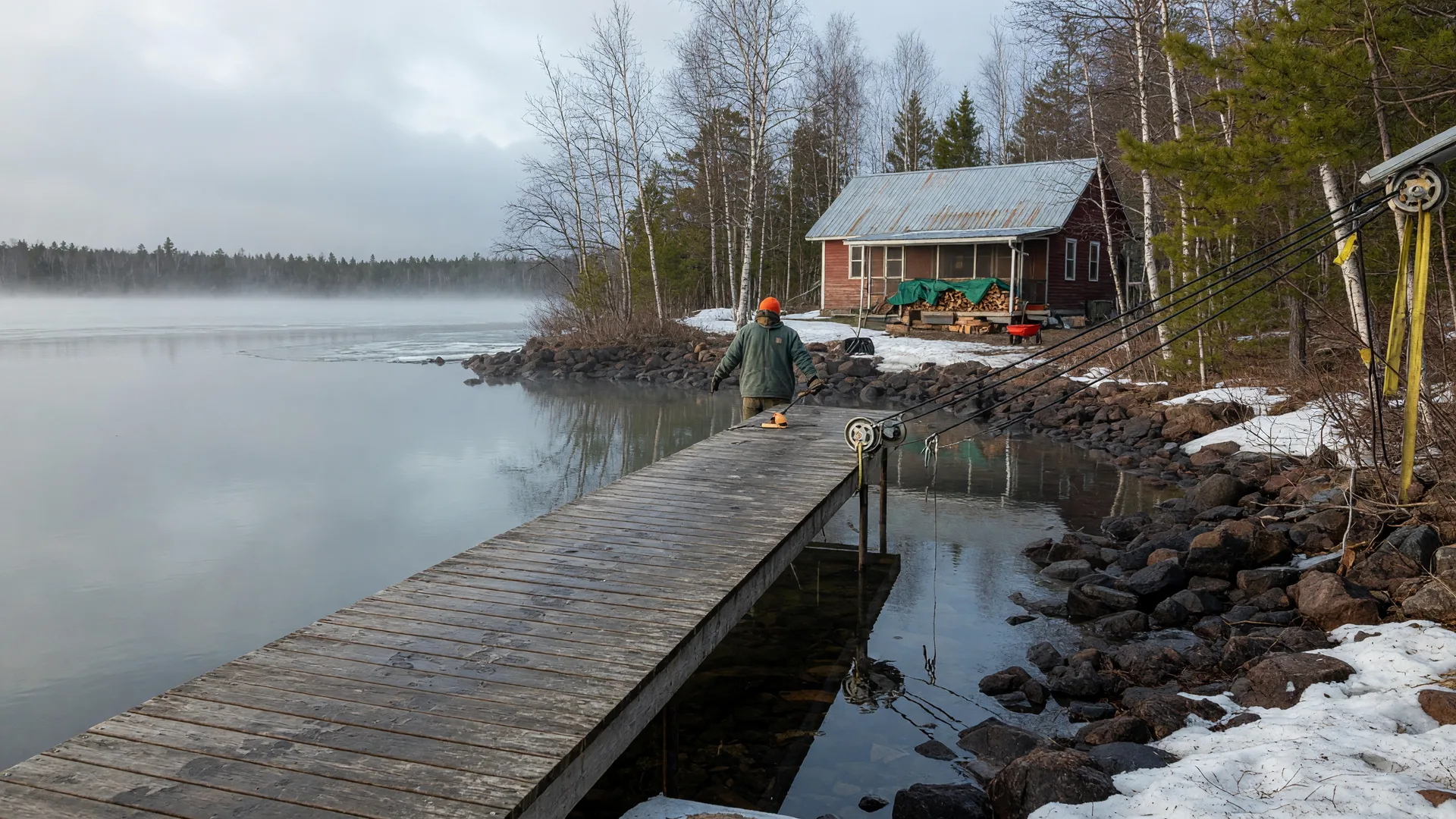
Ice-out arrives for most area lakes in mid to late April, with Gull often among the last. Fishing opener lands mid-May, docks go in, and the green returns fast. Spring is when lake problems reveal themselves: frost heave, erosion, roof damage, and the condition of the dock hardware.
Summer
The season everything builds toward. Boating, swimming, fishing, lake association events, and guests every weekend. Water temperatures make most area lakes genuinely swim-friendly, boat traffic peaks on the big names, and the evenings on the dock are the reason you bought the place.
Fall
Peak color typically arrives late September into early October. Cooler water means great fishing with far less traffic, the lake turns quiet after Labor Day, and the closing chores begin: docks out, systems winterized, and the shore buttoned up before the first hard freeze.
Winter
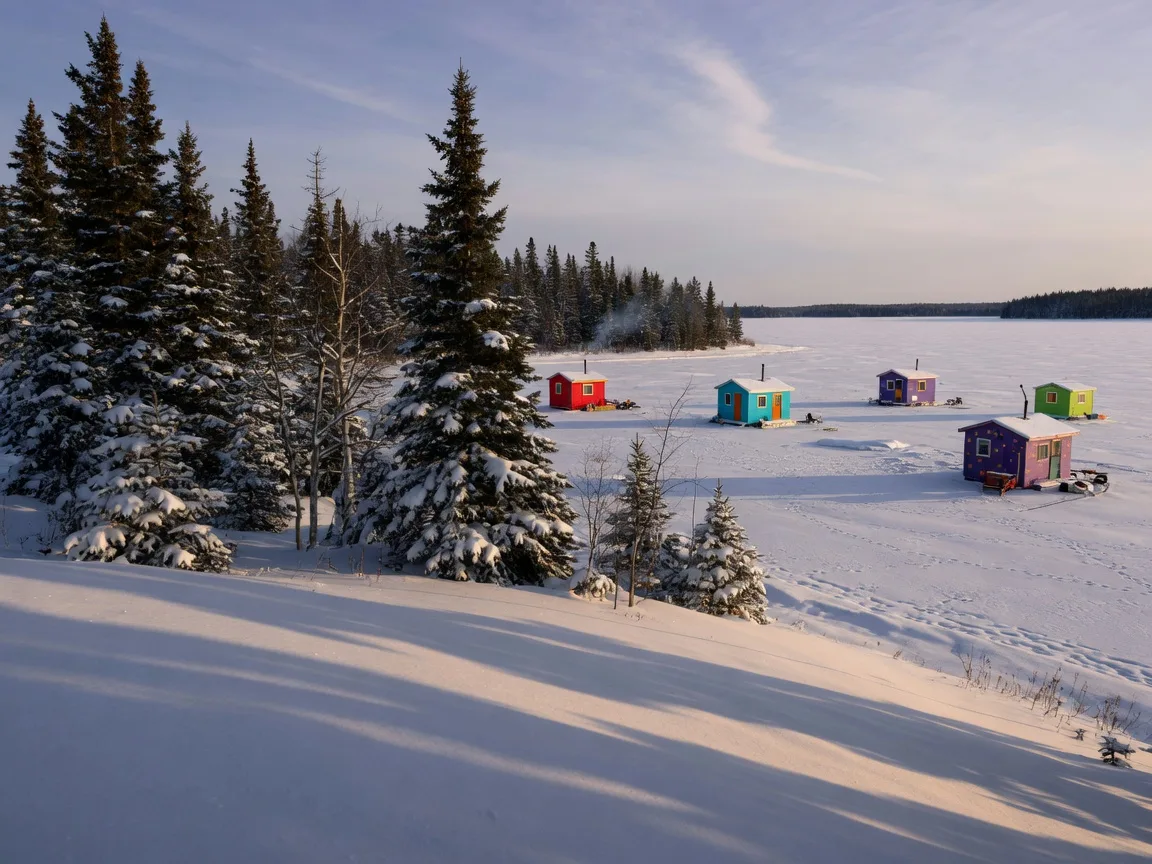
Cold, bright, and a different social season: ice fishing, snowmobile trails, and cozy nights by the fire. The area knows how to run in snow, and communities stay active. For seasonal owners, winter is when the "does this property still fit us?" conversation usually starts.
Questions Buyers Ask Us, Answered
These are the questions that come up on nearly every lake-home call we take. Click any question to expand the answer.
How old should the septic system be, and what happens if it fails?
Age matters less than compliance. Minnesota requires a compliant system at property transfer, and the county inspects and issues a compliance certificate as part of closing. Ask for the system’s age, permits, and pump-out history, and make your offer contingent on the compliance inspection. If a system fails, replacement cost depends heavily on the site: soil type, slope, and available space. A licensed septic designer and installer can give you a real number for a specific lot, and the county environmental services office is the authority on what is required.
How close to the water can I build?
Under Minnesota’s shoreland model rules, minimum structure setbacks from the ordinary high water level are typically 75 feet on General Development lakes, 100 feet on Recreational Development lakes, and 150 feet on Natural Environment lakes, with some reductions in sewered areas, plus a 30-foot bluff setback. Counties adopt their own versions of these rules, and townships layer on more. The operative numbers for your lot come from your county and township, so verify before you plan any project.
Can I rent out my lake home short-term?
It depends entirely on where the property sits. Short-term rental rules vary by county and township in the Lakes Area. Crow Wing County operates a licensing ordinance for rentals under 30 days in the areas it regulates, Cass County approved its own licensing ordinance in early 2025, and Aitkin County regulates vacation rentals through an interim use permit process. Some cities and townships run their own rules or contract with the county. If rental income matters to you, verify the specific address with the county planning office and the township before you offer. It is an easy question to ask and an expensive one to skip.
What is winter access really like?
It depends on whether the property sits on a year-round, township-maintained road or a seasonal access. Year-round homes on maintained roads behave like any Minnesota address: roads are plowed, deliveries run, and life continues. Seasonal cabins on seasonal roads may be unreachable by car in winter and accessed by snowmobile or skis, with heat off and water drained. If you plan to use the property in winter, year-round access and heated construction are not optional conveniences, they are requirements.
How is water quality measured, and what should I ask?
The most common public measure is Secchi clarity: how deep a disk stays visible, reported in feet. Lake associations across the area monitor clarity, phosphorus, and algae, and the DNR keeps lake data and aquatic vegetation records. Also ask about aquatic invasive species: zebra mussels, Eurasian watermilfoil, and spiny waterflea are present on many area lakes, and each lake has its own status. Ask for the monitoring history, not a single day’s reading.
Will the property hold its value?
Historically, the lakes with strong demand, good water quality, and limited developable shoreline have held value best: think Gull, the Whitefish Chain, and the bigger area lakes. Shoreline quality, frontage, and lake desirability drive resale far more than the house does. No lake is a guarantee, which is exactly the kind of honest market read we provide before you buy, with current sold data for the specific water you are considering.
What taxes come with a lake home?
Property taxes are set locally by county, city, school district, and special districts, and waterfront is typically assessed for its lake value: frontage, shoreline, and views, not just the house. Owner-occupied year-round homes may qualify for homestead treatment, which can lower the bill. Ask the county assessor about classification and homestead for any property you are serious about, and have your tax advisor review the numbers.
Can I finance a cabin or seasonal property?
Yes, but vacation and second-home lending works differently from a primary mortgage: expect different down payment requirements, underwriting, and possibly restrictions tied to seasonal construction or winter access. Appraisals on unique waterfront can also be more involved, because the appraiser is valuing the lake and lot as much as the house. Work with a lender who knows waterfront and second homes in this market, and start the conversation before you shop.
Do docks, lifts, and boats come with the house?
Sometimes. Docks, lifts, rafts, boats, and personal watercraft are usually treated as personal property and are negotiable, not automatic. List what you want included in the offer so there is no ambiguity at the finish line, and verify with county, township, and lake rules that the structures are permitted to stay as they are.
How is buying lake property different from buying a house in town?
You are buying four things at once: the lake, the lot, the shoreline, and the house. Due diligence spans water quality, septic compliance, shoreline stability, depth and drop-off, shoreland rules, and winter access, in addition to a normal home inspection. Two similar-looking listings can have very different values because of what the camera does not show. That is why a local agent who evaluates lake property every week is worth far more than a generic transaction.
Let's Find Your Lake Home
No guide survives contact with a real property. What does not change is having a local team that grew up here, has walked these lakes for a lifetime, and will give you honest answers about water quality, shoreline, value, and the difference between a good deal and a good story. Call, email, or book 30 minutes. No pressure, just straight talk and current numbers for the lakes you care about.
7119 Forthun Road, Baxter, MN 56425
Elevate Group, brokered by eXp Realty · Greater Lakes Association of Realtors

Noah Goedker
Realtor · Elevate Group, brokered by eXp Realty · License 40692293 · MN
Cheers!
Tell Us What You're Considering
A few details help us pull current listings and sold data for the lakes and property types you care about before we talk.
Equal Housing Opportunity. Elevate Group is brokered by eXp Realty, LLC. Licensed in Minnesota.